


close
Choose Your Site
Global
Social Media

Chemical manufacturing relies heavily on stringent safety and pristine product conditions. Explosion prevention and product integrity remain non-negotiable pillars across global storage facilities. Without proper atmospheric control, valuable raw materials degrade quickly and dangerously. Traditional nitrogen supply methods rely heavily on liquid cylinders and bulk cryogenic dewars. These legacy models introduce massive supply chain vulnerabilities and physical safety hazards. Operators face unpredictable operational expenses from constant boil-off waste and rising delivery fees. Transitioning to an on-site Nitrogen Generator directly transforms how facilities manage tank blanketing applications. Process engineers gain absolute control over gas purity, supply reliability, and long-term operating efficiency. You will discover how modern gas generation equipment secures these process benefits. We will explore how facilities exceed strict industrial safety standards while simplifying their daily utility management.
Operational Autonomy: An on-site nitrogen generator eliminates reliance on third-party gas deliveries, securing uninterrupted production and blanketing processes.
Precision Purity: Chemical blanketing requires specific purity levels (typically 95% to 99.999%); modern generators allow operators to dial in the exact specification needed, avoiding the overpaying associated with universal liquid nitrogen grades.
Verifiable ROI: Despite initial CAPEX, transitioning to generated nitrogen typically yields a payback period of 12 to 24 months by eliminating recurring rental, delivery, and loss-to-atmosphere costs.
Risk Mitigation: Continuous, regulated inert gas flow effectively prevents oxidative degradation, moisture cross-contamination, and combustible vapor ignition inside storage vessels.
Chemical production demands strict environmental control at every stage. Exposure to ambient air introduces severe operational risks to your facility. Oxygen causes rapid oxidation in sensitive chemical compounds. Moisture absorption ruins hygroscopic substances and delicate fine chemicals. Furthermore, volatile organic compounds (VOCs) easily accumulate inside the headspace of storage tanks. These dangerous vapors require immediate neutralization to maintain safe working conditions.
You solve these baseline problems through effective tank blanketing. This process involves filling the empty space inside a storage vessel with an inert gas. A successful blanketing system consistently achieves several crucial objectives:
It maintains a constant, slightly positive pressure of inert gas in the tank headspace.
It compensates dynamically for thermal breathing caused by daily temperature fluctuations.
It instantly balances pressure changes caused by liquid displacement during active pump-in and pump-out actions.
It blocks external ambient air from entering through vents or loose seals.
Process engineers know the consequences of system failure are severe. Compromised product batches lead to massive financial losses and production delays. Facilities also risk significant regulatory fines if VOC emissions escape into the atmosphere. Most importantly, failing to control headspace vapors creates catastrophic fire risks. Combustible vapors ignite easily if oxygen levels remain unchecked. Reliable blanketing eliminates the oxygen side of the fire triangle entirely.
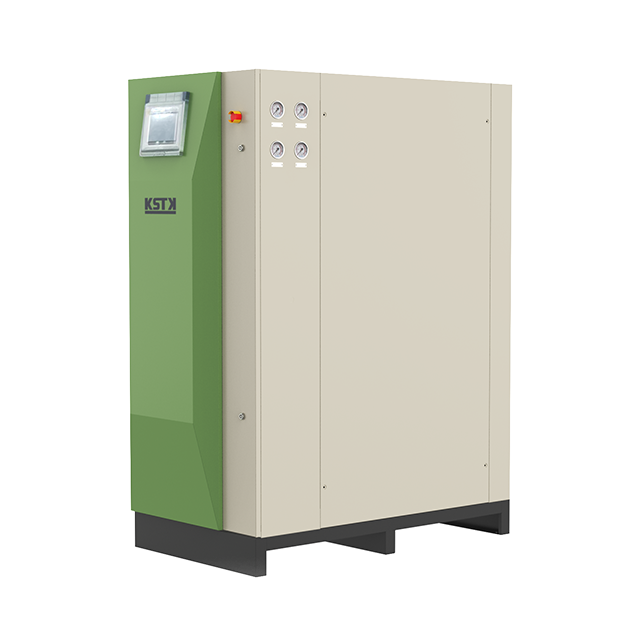
Facilities historically relied on delivered industrial gases to blanket their tanks. Today, advanced technologies allow plants to produce their own supply. We must compare these two approaches to understand their operational impacts.
Delivered liquid nitrogen represents the legacy model. It offers a low initial equipment cost. Delivery services handle the primary tank installations. This method works adequately for operations demanding ultra-high, infrequent burst flows. However, it carries significant drawbacks. Facilities suffer hidden costs constantly. Cryogenic liquid naturally warms and expands, meaning 10% to 20% of the purchased product escapes as boil-off waste. Plants also face rigid long-term vendor contracts and volatile delivery surcharges. Moreover, handling cryogenic liquids introduces serious physical hazards to your site personnel.
An on-site Nitrogen Generator represents the modern standard for chemical processing. It delivers fixed, highly predictable operational expenditures. Production matches your exact consumption profiles dynamically. You eliminate the environmental impact of recurring delivery trucks, achieving a massive reduction in your carbon footprint.
We must outline transparent assumptions regarding on-site generation. Implementing this technology requires upfront capital expenditure (CAPEX). You must allocate dedicated floor space for the equipment. Additionally, your maintenance teams must perform routine servicing on upstream air compressors and filtration units. Despite these requirements, the logistical freedom strongly favors localized production.
The table below summarizes the core differences between these supply methods:
Feature | Delivered Liquid Nitrogen | On-Site Generated Nitrogen |
|---|---|---|
Supply Reliability | Vulnerable to weather and truck logistics. | 100% on-demand operational autonomy. |
Waste Factor | 10% - 20% lost to cryogenic boil-off. | Zero boil-off. Gas is generated as needed. |
Purity Control | Locked into over-specified universal grades. | Adjustable purity (95% to 99.999%). |
Safety Hazards | High-pressure offloading, frostbite risks. | Safe, low-pressure ambient generation. |
Environmental Impact | High (constant heavy truck deliveries). | Low (eliminates delivery-related emissions). |
Selecting the correct system requires careful engineering analysis. Facilities must match the generator type and capacity to their precise chemical behaviors.
Two primary technologies dominate modern nitrogen generation. Pressure Swing Adsorption (PSA) utilizes twin towers filled with Carbon Molecular Sieve (CMS). Compressed air enters the tower under pressure. The CMS captures oxygen molecules while allowing nitrogen to pass through. PSA technology operates optimally for applications requiring ultra-high purity up to 99.999%. It delivers high flow rates efficiently. We recommend PSA systems primarily for highly reactive fine chemicals.
Membrane generators use bundles of hollow polymer fibers. Compressed air flows through these fibers. Fast-moving gases like oxygen permeate the fiber walls quickly, leaving concentrated nitrogen to exit the tube. Membrane systems excel where lower purity requirements (95% to 99%) suffice. They offer unmatched mechanical simplicity. They feature minimal moving parts, making them ideal for rugged environments. Process engineers typically specify membranes for general bulk chemical blanketing.
Proper system sizing prevents production bottlenecks. Engineers must evaluate peak demand versus continuous flow carefully. Continuous flow covers the baseline thermal breathing of the tanks. Peak demand occurs during sudden, simultaneous tank discharging. When powerful pumps remove liquid rapidly, the system must instantly fill the expanding void with nitrogen. If the gas flow lags, the tank risks implosion from internal vacuum forces. You calculate maximum simultaneous draw by summing the displacement rates of all active pumps.
Engineers often face the trap of purity over-specification. Delivered liquid nitrogen arrives at 99.999% purity by default. Many operators assume they require this exact grade for their generators. However, demanding 99.999% purity unnecessarily inflates equipment size and energy consumption. Most industrial blanketing applications only require 98% purity to suppress a chemical's flash point safely. Dialing in the exact purity requirement reduces your upfront capital and ongoing energy usage significantly.
Installing a generation system demands thorough facility planning. You must integrate the equipment smoothly into your existing utility infrastructure.
Your generator functions only as reliably as its feed air. High-quality, dry, and oil-free compressed air remains absolutely critical. Facilities must adhere strictly to ISO 8573-1 air quality standards. Contaminated air introduces oil aerosols and bulk moisture into the generation process. These contaminants permanently foul the carbon molecular sieve in PSA systems. They also clog delicate membrane fibers. We strongly advise implementing a robust multi-stage filtration train. This train should include particulate filters, coalescing filters, and activated carbon towers.
Facility layout considerations dictate installation success. Skid-mounted systems offer excellent plug-and-play convenience. You can drop a pre-piped skid directly onto a concrete pad. However, operators must account for adequate ventilation. Generators expel concentrated oxygen-rich exhaust during the separation process. You must route this exhaust safely away from enclosed workspaces to prevent fire hazards. Furthermore, engineers must design clear tie-ins from the generator to existing plant nitrogen headers.
Risk mitigation requires diligent redundancy planning. Chemical facilities cannot tolerate utility downtime. We recommend designing N+1 redundant systems where feasible. An N+1 setup utilizes multiple modular generators. If one unit requires offline maintenance, the backup unit assumes the active load automatically. Alternatively, facilities maintain a small liquid nitrogen backup manifold. This hybrid approach ensures 100% uptime during unexpected power losses or extended mechanical service intervals.
Chemical processing operations face heavy regulatory scrutiny. Automated blanketing systems help facilities demonstrate continuous environmental control during stringent audits.
Industry standard alignment forms the foundation of facility safety. The American Petroleum Institute established API 2000 to govern the venting of atmospheric and low-pressure storage tanks. API 2000 specifically dictates the required gas flow rates to compensate for thermal breathing and pump-out actions. Similarly, the National Fire Protection Association enforces NFPA 69. This standard covers explosion prevention systems. It outlines precise methods for combustible concentration reduction. An automated generator ensures your headspace oxygen levels always remain below the established limiting oxidant concentration (LOC).
Modern generators integrate seamlessly with facility automation networks. Generators feature programmable logic controllers (PLCs). You integrate these PLCs directly with your distributed control systems (DCS). This connectivity allows operators to monitor gas production in real time. Systems utilize continuous oxygen analyzers and low-pressure alarms on the storage vessels. If pressure drops unexpectedly, the DCS alerts operators immediately. These digital control loops provide verifiable historical data. You use this data to prove continuous environmental control to compliance auditors.
Finally, self-generated utilities support corporate sustainability mandates. Modern chemical companies face intense pressure to meet Environmental, Social, and Governance (ESG) goals. Relying on delivered gases generates significant Scope 3 supply chain emissions from heavy diesel trucks. By moving production on-site, you eliminate these endless vendor deliveries. You dramatically reduce your facility's overall carbon footprint while securing a vital process utility.
Securing product integrity and plant safety is best achieved when your facility completely controls its own inert gas supply. Legacy delivery methods introduce unacceptable logistical risks and costly waste. Transitioning to localized gas generation eliminates these variables entirely. It ensures your storage vessels remain perfectly pressurized and strictly inert.
Decision-makers must rely on sound shortlisting logic. Begin by evaluating your actual chemical purity needs rather than defaulting to generic liquid grades. Assess your current gas invoices to identify hidden delivery surcharges and boil-off losses. You must also calculate your specific continuous breathing rates versus peak pump-out flow rates accurately.
We encourage process engineers and procurement teams to take immediate action. Request a comprehensive site audit and flow profile analysis from a qualified application engineer. This data-driven approach will determine the precise sizing and operational benefits of a custom gas generation system for your facility.
A: Fact: While critical for preventing fires in flammable liquids, blanketing is equally vital for non-hazardous applications. Fine chemicals, food-grade additives, and pharmaceuticals rely on blanketing heavily. It prevents rapid oxidation, blocks ambient moisture contamination, and stops unwanted product discoloration during long-term storage.
A: Sudden temperature drops cause internal tank vapors to contract rapidly. For example, a cold rainstorm hitting a warm storage tank creates an instant volume shift. The generator and buffer tank must be appropriately sized to instantly deliver a high volume of gas. This rapid injection prevents the tank from imploding due to sudden vacuum creation.
A: With pristine feed-air quality, a PSA system's Carbon Molecular Sieve can easily last 15 to 20 years. Operators must regularly change coalescing filters and maintain the upstream air compressor perfectly. Routine generator maintenance remains generally low. It focuses primarily on annual control valve checks and basic oxygen sensor calibrations.
A: Yes. Engineers design these systems with appropriately sized receiver tanks. This buffer tank stores concentrated gas at high pressure. The buffer easily handles sudden spike demands during simultaneous pump-outs. Meanwhile, the generator runs steadily to replenish the buffer volume over time. This design prevents the need to vastly oversize the core generator.

