


close
Choose Your Site
Global
Social Media

Relying on traditional oxygen supply chains creates severe systemic vulnerabilities for healthcare facilities. Cylinders and bulk liquid shipments frequently fail during peak demand crises. They also prove highly unreliable in remote geographic locations. Delivery delays and logistical hurdles put patient lives directly at risk. Pressure Swing Adsorption (PSA) technology provides a mature, decentralized alternative. It effectively shifts medical facilities from dependent consumers to independent producers. You take full, immediate control of your critical life-saving gas supply. We designed this comprehensive guide for medical procurement teams, hospital administrators, and emergency planners. It provides a robust, evidence-based framework for evaluating and safely implementing an on-site medical Oxygen Generator. You will learn how to accurately assess your clinical capacity needs. You will also discover how to ensure strict regulatory compliance and mitigate common deployment risks to protect patient care.
Supply Chain Resilience: On-site PSA oxygen generators eliminate logistical dependencies and delivery costs associated with traditional cylinders.
Proven Medical Compliance: Modern PSA systems reliably produce 93% (±3%) oxygen purity, meeting WHO, US, and European Pharmacopeia standards for medical use.
Predictable ROI: Transitioning to point-of-need generation shifts ongoing operational expenses (OPEX) to a capital expenditure (CAPEX) model with a typical break-even of 12 to 24 months.
Risk Mitigation: Successful implementation requires addressing power stability, pre-filtration (compressor air quality), and N+1 redundancy planning.
Hospitals historically rely on external vendors for life-saving gases. This reliance introduces severe logistical bottlenecks. It leaves clinical operations vulnerable to external disruptions beyond hospital control.
The problem with traditional models stems from their physical limitations. High-pressure cylinders present numerous operational challenges. They require constant manual handling by facility staff. Technicians must physically move heavy metal tanks daily. This creates significant workplace hazards and increases injury risks. You must dedicate massive storage footprints to house empty and full cylinders. Delivery delays routinely threaten critical care operations during severe weather or regional emergencies.
Liquid Oxygen (LOX) poses its own unique set of problems. Facilities lose significant gas volume simply to natural boil-off. Liquid naturally turns to gas and escapes when unused. Regulators mandate strict safety zones for LOX storage. These installations require large concrete pads and specific distances from property lines. You remain entirely dependent on specialized cryogenic delivery trucks reaching your site on schedule.
The point-of-need alternative fundamentally changes this dynamic. A modern Oxygen Generator produces gas directly at your facility. It offers total logistical autonomy. You connect the system directly to the central hospital pipeline. It easily supports a localized cylinder filling manifold for internal distribution. Safety dramatically improves because the system operates at much lower pressures. This minimizes explosive hazards typically found in heavily stored high-pressure cylinders. Production output remains flat and predictable. Market supply fluctuations no longer dictate your clinical capabilities.
Comparison Chart: Traditional Supply vs. Point-of-Need PSA Generation | |||
Evaluation Dimension | High-Pressure Cylinders | Liquid Oxygen (LOX) | PSA Generation |
|---|---|---|---|
Logistical Dependency | High (Frequent deliveries required) | High (Specialized trucks required) | None (Independent continuous production) |
Safety Risks | High pressure hazards, manual handling injuries | Cryogenic burns, strict zoning laws | Low pressure, no manual lifting required |
Supply Stability | Vulnerable to supply chain delays | Vulnerable to vendor shortages | High (Requires stable facility power) |
You might wonder how ambient air becomes a life-saving medical gas. Pressure Swing Adsorption relies on a straightforward, highly effective mechanical process. It strips away unwanted elements from the air we breathe.
Air compressors pull in standard ambient air. They feed this air into twin structural towers. Manufacturers fill these towers with Zeolite molecular sieves. The system pressurizes the active tower. The Zeolite naturally adsorbs nitrogen molecules under this elevated pressure. It traps them tightly within its porous microscopic structure. This process allows concentrated oxygen to pass directly through into a dedicated buffer tank. One tower depressurizes to release trapped nitrogen back into the atmosphere. Simultaneously, the other tower actively produces gas. This alternating, continuous cycle ensures uninterrupted supply for patients.
Regulatory compliance forms the absolute bedrock of medical gas production. Prominent global institutions rigorously validate this technology. The World Health Organization (WHO) provides clear technical specifications for PSA plants. They mandate strict adherence to global safety protocols. Modern equipment meets the rigorous standards set by the European Pharmacopeia 7.1.5. It also complies fully with the United States Pharmacopeia (USP 93%) monograph for medical use.
Many hospital administrators harbor a common misconception about purity requirements. They mistakenly believe 99% purity from liquid sources is clinically necessary for all treatments. This is simply untrue. Extensive scientific evidence proves 93% (±3%) purity is highly effective. It remains functionally identical to 99% LOX for the vast majority of patient applications. You can safely use it in intensive care units. Anesthesiologists rely on it daily for complex surgeries. It serves general respiratory wards perfectly. The human body does not differentiate between 93% and 99% concentrations during standard respiratory therapy.
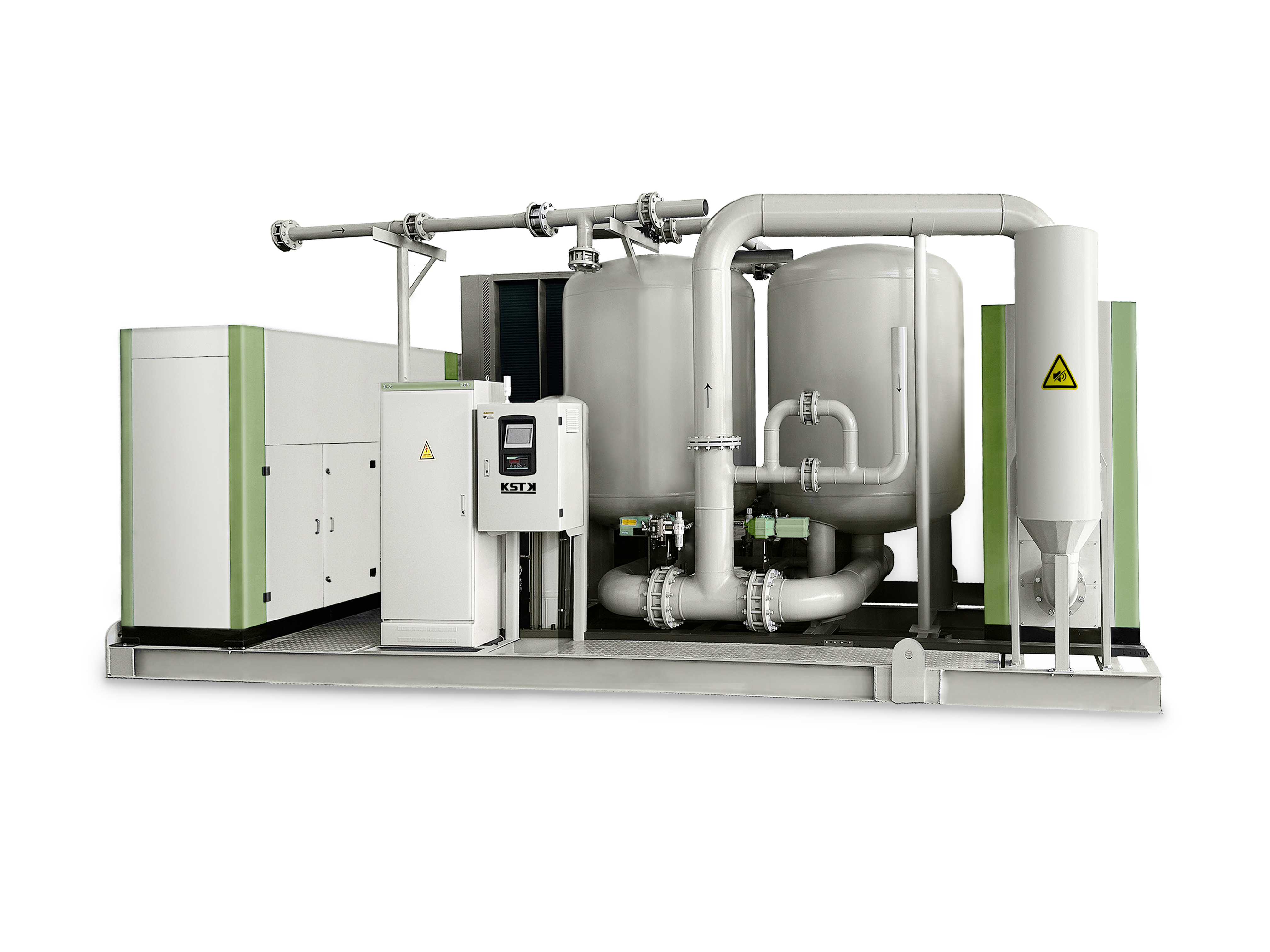
Evaluating an Oxygen Generator requires a highly structured approach. You must map specific hardware features directly to concrete clinical outcomes.
Proper sizing dictates the ultimate success of your project. You must perform a comprehensive audit of your current facility consumption. Measure your specific flow rate in Liters Per Minute (LPM) or Normal Cubic Meters per Hour (Nm³/h). Guesswork leads directly to dangerous under-sizing. It can also lead to massively wasteful over-sizing. You must accurately account for sudden peak flow demands. Do not rely solely on average daily consumption figures. A winter respiratory virus surge requires far more capacity than a quiet summer week. You must size the plant to handle your historical maximum peak plus a calculated safety margin.
Your clinical infrastructure needs will evolve over time. You must decide carefully between modular systems and fixed-capacity plants. Modular units allow you to add capacity later. You simply install additional towers as your hospital expands. Fixed systems often suit established facilities facing stable, predictable patient loads. You must also consider your physical deployment configuration. Most hospitals integrate the equipment directly into existing central gas pipelines. However, you should also include localized cylinder filling stations. These secondary stations provide essential emergency backup capabilities. You can fill your own portable tanks for ambulance transport or internal ward transfers.
Visibility ensures continuous, unbreakable patient safety. Modern units feature advanced telemetry and comprehensive system monitoring. You need real-time analyzers tracking output streams constantly. A robust system includes several critical monitoring features:
Pressure Sensors: They monitor flow dynamics constantly to prevent dangerous line drops.
Automated Purge Valves: They protect the main hospital pipeline from sub-standard contamination.
Remote Dashboards: They allow off-site engineers to monitor system health and schedule repairs.
If output purity drops below the critical 90% threshold, automated valves immediately activate. They vent the substandard gas outside. They completely prevent it from reaching the patient pipeline. Remote monitoring capabilities also enable advanced predictive maintenance. Technicians can easily identify failing valves or degrading filters long before they cause a critical system shutdown.
Proper implementation requires strict, uncompromising risk management. You cannot simply install the machinery and walk away. Facilities must prepare their infrastructure adequately.
The operational longevity of your system depends entirely on feed air quality. Ambient air contains numerous invisible hazards. Oil vapors, ambient moisture, and particulate matter will permanently damage the delicate Zeolite molecular sieve. Once contaminated by oil or water, the sieve cannot recover. You must replace the entire bed at significant expense. To prevent this catastrophe, your installation must require multi-stage filtration. You need coarse particulate filters followed by fine coalescing filters. You also need heavy-duty refrigerated air dryers. They strip out damaging water vapor before it ever reaches the active generator towers.
PSA systems demand continuous, highly stable electricity to function correctly. Minor power fluctuations interrupt the sensitive adsorption cycle. They quickly compromise gas purity. You must discuss and secure robust power redundancy before deployment. Uninterruptible Power Supply (UPS) systems are non-negotiable in medical environments. They seamlessly bridge the gap during sudden grid failures. You also need dedicated backup diesel generators. They sustain prolonged clinical operations during severe, multi-day weather outages.
Patient safety demands foolproof, overlapping backup plans. The healthcare industry operates strictly on the N+1 redundancy rule. Even an incredibly reliable Oxygen Generator requires scheduled preventative downtime. Facilities must maintain a completely independent secondary supply line. We strongly recommend installing an automatic changeover manifold. It should connect directly to a robust, fully stocked bank of backup cylinders. This architecture guarantees absolute zero patient risk. It covers routine compressor overhauls and protects against sudden mechanical faults safely.
Procurement teams face a densely saturated global market. You must narrow your options systematically. Base your final decisions on facility size and strict vendor credibility.
Here is a structured approach to hardware selection:
Assess Facility Scale: Small rural clinics and remote outposts should prioritize plug-and-play skid-mounted systems. Portable emergency response units work best when you lack complex infrastructure. They require minimal installation labor and basic power connections.
Plan for Heavy Loads: Mid-to-large urban hospitals must focus on robust duplex systems. A duplex configuration provides essential internal redundancy. You need seamless central pipeline integration. Look for comprehensive long-term warranties covering operational wear and tear.
Verify Medical Certifications: Never compromise on established medical standards. Demand verifiable ISO 13485 certifications specific to Medical Devices. Do not accept general manufacturing certificates alone. You also need standard ISO 9001 quality management proofs from the manufacturer.
Evaluate Service Agreements: Excellent hardware represents only half the equation. You must scrutinize the Service Level Agreement (SLA) carefully. Ensure the vendor guarantees local spare parts availability in your region. Pay special attention to compressor servicing components. Air compressors require frequent preventative maintenance. You must also clarify Zeolite replacement logistics and timelines.
An on-site system using mature PSA technology serves as a primary, strategic infrastructure upgrade. It is no longer just a temporary stopgap measure for modern healthcare facilities. It provides unmatched supply chain resilience and verified clinical safety for patients worldwide. By shifting away from vulnerable external deliveries, administrators protect their most critical care operations effectively.
To move forward efficiently, procurement teams should initiate these actionable next steps:
Conduct a rigorous one-month audit of your current flow consumption in liters per minute.
Log your highest peak usage times to understand maximum load requirements accurately.
Assess your local facility power stability and map out required backup generator capacities.
Compile these specific technical metrics to build an accurate clinical needs profile before requesting comprehensive vendor quotes.
A: These systems typically last 10 to 15 years with proper, scheduled maintenance. However, you will likely need major air compressor overhauls around the 5 to 10-year mark. Zeolite molecular sieve replacement may also be required during this period. Lifespan depends heavily on the quality of the ambient feed air and strict adherence to pre-filtration replacement schedules.
A: Yes. Modern medical equipment is specifically calibrated to accept 93% (±3%) oxygen safely. Global health organizations, including the WHO, fully endorse this specific purity level for critical care environments. It provides the exact same clinical outcomes as 99% liquid sources for intensive care, anesthesia, and general respiratory therapy applications.
A: Modern units feature integrated, automatic safety mechanisms. If sensors detect a purity drop below acceptable clinical thresholds, automated divert and purge valves activate immediately. They instantly exhaust the sub-standard gas outside. The system automatically switches the facility pipeline to the secondary backup cylinder manifold. It simultaneously triggers an audible alarm to notify technical staff.

