


close
Choose Your Site
Global
Social Media

Dissolved oxygen dictates the survival and prosperity of commercial fish farming. A sudden failure in your oxygen supply spells catastrophic crop loss within mere minutes. Traditionally, facilities relied heavily on delivered liquid oxygen or high-pressure cylinders to maintain life support. This dependence creates enormous logistical risks and unpredictable operational expenses tied to delivery schedules. Today, savvy facility managers are shifting their sourcing strategy toward investing in on-site generation technology.
This guide goes beyond basic definitions. You will learn how modern Recirculating Aquaculture System (RAS) operators evaluate, size, and procure a dedicated system. We will show you how to balance capital investment, daily operational expenses, and absolute biological security. You will discover exactly how to avoid common sizing traps and build a fail-safe architecture for your facility.
Operational Autonomy: On-site oxygen generators eliminate supply chain vulnerabilities, delivery costs, and the safety hazards of storing bulk high-pressure cylinders.
Predictable ROI: While requiring upfront capital, the shift from delivered oxygen to on-site generation typically yields a return on investment within 12 to 24 months through stabilized OPEX.
Technology Standard: Pressure Swing Adsorption (PSA) is the industry standard for aquaculture, reliably producing 90-95% oxygen purity, which is optimal for dissolving into fish tank water.
Risk Mitigation: A standalone generator is not a complete strategy; secure implementation requires redundant power, proper sizing for peak biomass, and emergency backup protocols.
Facility managers constantly weigh the costs and benefits of how they source their most critical gas. Transitioning away from external suppliers fundamentally alters your operational financial structure.
Delivered oxygen offers a low initial capital expenditure (CAPEX). You simply rent tanks and pay for the gas. However, this method brings high, volatile, and endless operational expenses (OPEX). You face recurring delivery fees, environmental taxes, and endless cylinder rental charges. You also suffer from invisible losses. Liquid oxygen tanks naturally vent gas to prevent dangerous pressure build-ups. You pay for off-gassing losses you never even use.
On-site generation flips this financial model. You face a higher upfront equipment purchase. In return, you secure incredibly low and highly predictable operational costs. Your primary expenses become basic electrical consumption and routine air compressor maintenance. You produce gas on demand, eliminating venting waste entirely.
Below is a simplified comparison chart demonstrating the structural shift:
Evaluation Metric | Delivered Liquid/Cylinder Oxygen | On-Site Generation System |
|---|---|---|
Capital Expenditure | Low. Minimal hardware investment required upfront. | Higher. Requires purchasing compressors and generators. |
Operating Expenses | High and volatile. Subject to fuel surcharges. | Low and stable. Tied directly to local electricity rates. |
Waste Factors | High. Liquid oxygen constantly evaporates (off-gasses). | Zero. Gas is generated purely on demand. |
Logistical Risk | Extreme. Missed deliveries risk total crop loss. | Minimal. Complete independence from supply chains. |
External reliance introduces severe vulnerabilities. Missed deliveries disrupt farm operations immediately. Many commercial farms sit in remote locations. These areas struggle to secure consistent delivery routes from major gas suppliers. Furthermore, severe weather events can sever supply lines entirely. A blizzard or flood could prevent trucks from reaching your gates, placing millions of dollars in livestock at risk. Installing an industrial Oxygen Generator removes these external vulnerabilities completely. You gain total control over your life support systems.
Continuous, unlimited access to oxygen transforms farm productivity. You can safely maintain significantly higher stocking densities. When oxygen levels remain optimal and stable, fish digest their feed far more efficiently. This vastly improves your feed conversion ratios (FCR). High dissolved oxygen levels also boost immune responses naturally. This drastically reduces the likelihood of catastrophic disease outbreaks. Operators no longer need to ration purchased gas during expensive peak growth periods.
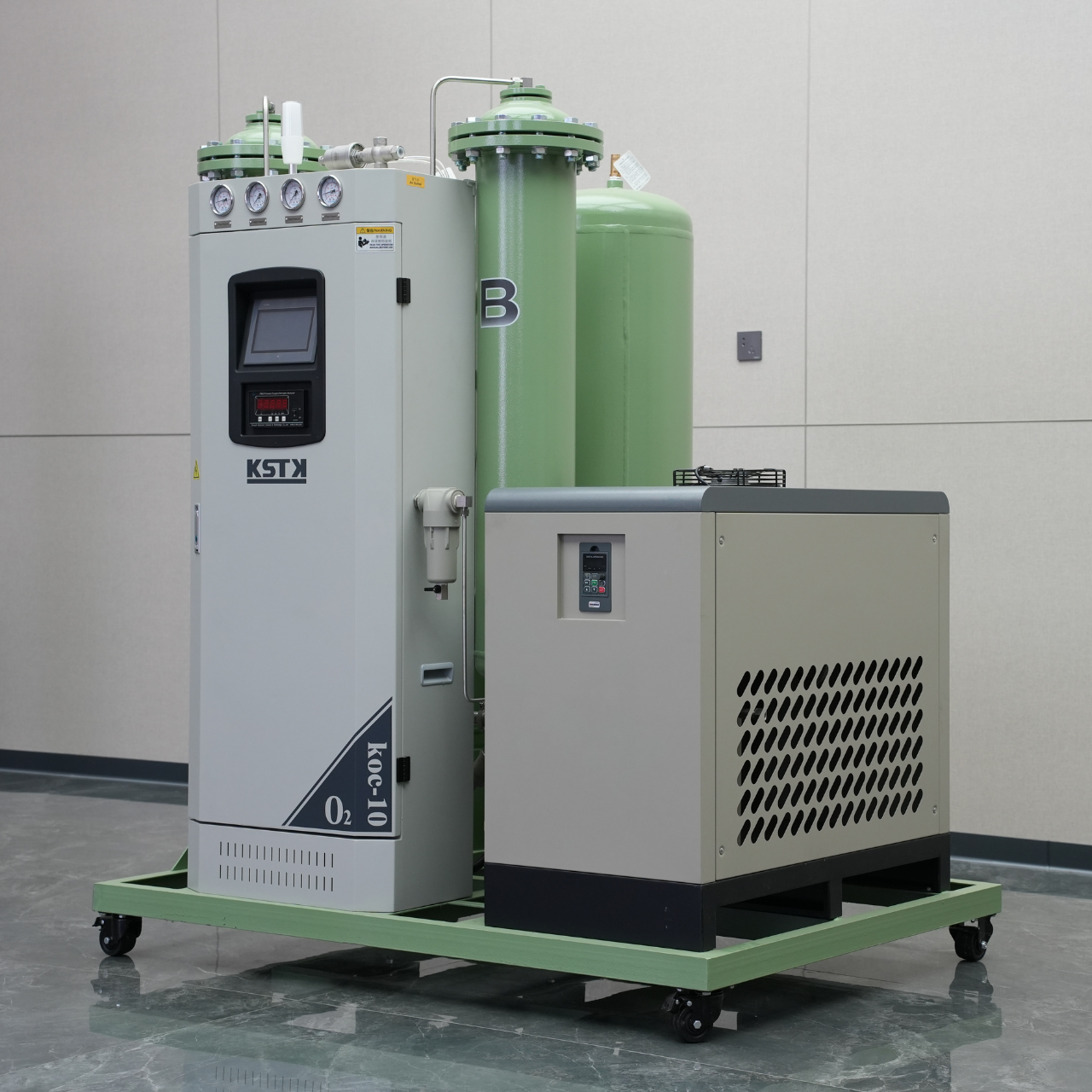
Modern fish farms rely heavily on specific gas separation technologies. Understanding how these machines work helps you make better purchasing decisions and maintain them properly.
Pressure Swing Adsorption represents the gold standard for aquaculture applications. The process separates nitrogen from ambient compressed air. It relies on a specialized material called Zeolite Molecular Sieve. The system typically features two distinct pressure vessels filled with this zeolite.
Compression: An air compressor pushes ambient air into the system.
Filtration: Dryers and filters remove moisture, oil, and dust from the air stream.
Adsorption: The clean air enters the first vessel. Under high pressure, the zeolite traps the nitrogen molecules. The oxygen molecules pass freely through to a receiver tank.
Regeneration: Once the first vessel saturates with nitrogen, the system redirects airflow to the second vessel. The first vessel depressurizes, safely venting the trapped nitrogen back into the atmosphere.
This alternating dual-tower cycle ensures a continuous, uninterrupted flow of concentrated gas.
Many novice operators assume farms require 99% medical-grade purity. This represents a costly misconception. Purities between 90% and 95% represent the absolute sweet spot for water absorption. Standard cones, low-head oxygenators, and ceramic diffusers dissolve this specific concentration highly efficiently.
Pushing a machine to achieve 99% purity dramatically increases energy consumption. It also requires vastly oversized air compressors. Producing 93% purity provides maximum biological benefit to your fish at a mere fraction of the operational cost. There is simply no biological justification for medical-grade purity in commercial fish farming.
Fish require a relentless, uninterrupted flow of life support. However, an industrial Oxygen Generator rarely feeds injection systems directly. Instead, they run to fill a specialized buffer tank, also known as a receiver tank. This large vessel maintains constant, stable pressure. It delivers a steady flow downstream to your water diffusers, regardless of immediate air compressor cycling. This setup manages the workload efficiently and ensures stable dissolved oxygen levels 24/7.
Procuring capital equipment requires strict due diligence. You must look beyond the initial price tag to evaluate the long-term viability of the system.
Farm managers must match system output to peak biomass demand. Never size your equipment based on average daily consumption. You must calculate the exact flow rate, typically measured in Normal cubic meters per hour (Nm³/h). If your system cannot handle the absolute highest demand spike of the year, you risk mass mortality events.
Electricity represents your primary ongoing expense. You must carefully evaluate the power consumption of the entire hardware package. Do not just look at the generator unit alone. Calculate the combined wattage of the air compressor, the refrigerant dryer, and the generator. Ask manufacturers to provide the exact kilowatt (kW) requirement to produce one Normal cubic meter of oxygen. This metric reveals the true efficiency of the setup.
Aquaculture facilities feature incredibly harsh, high-humidity environments. You must aggressively assess the build quality.
Valve Durability: Pneumatic valves cycle millions of times per year. Cheap valves will fail rapidly, halting production.
Zeolite Quality: Inferior sieves degrade quickly, causing purity levels to plummet after just a few years.
Environmental Protection: Decide between open skid-mounted setups or fully enclosed, containerized systems. Humid, salty environments often demand climate-controlled containerized solutions.
Modern farm management relies on data. Your system must include comprehensive telemetry. Demand real-time alarms that notify your phone if pressure drops. Purity tracking ensures the machine continually hits that crucial 90-95% mark. Most importantly, the unit must integrate seamlessly with your farm’s central SCADA or automated dissolved oxygen monitoring network.
Even the highest-quality equipment will fail if deployed incorrectly. Proper sizing and proactive risk management separate successful farms from disastrous failures.
Under-sizing remains the most catastrophic mistake in the aquaculture industry. Farms often calculate their annual average requirement and purchase a machine based on that number. This guarantees failure. You must design your architecture for worst-case scenarios.
Your systems must account for intense peak feeding times when metabolic rates soar. You must consider summer water temperatures. As water heats up, its natural oxygen solubility drops drastically. You have to inject far more gas to maintain the same dissolved levels. Finally, you must calculate the demand based on the maximum fish weight immediately prior to harvest. Size your machine for the hottest day, with the biggest fish, during the heaviest feed cycle.
Generating the gas is only half the battle. You must dissolve it into the water. Your Oxygen Generator must perfectly match the pressure specifications of your downstream equipment. High-pressure cones require vastly different delivery pressures than standard low-head oxygenators or ceramic diffusers. Mismatched pressure ratings lead to massive energy waste and poor dissolution rates.
Transparency regarding maintenance prevents unexpected downtime. You cannot simply plug these machines in and forget them. Routine tasks dictate the lifespan of your investment. You must schedule regular air filter replacements and strict compressor oil changes.
Moisture control stands as the most critical maintenance priority. Water vapor or compressor oil carry-over destroys the zeolite sieve instantly and permanently. If your refrigerant dryer fails and lets moisture into the generator vessels, you will face an incredibly expensive sieve replacement.
Always build a fail-safe architecture. A standalone machine is a single point of failure. A credible, professional setup requires layered redundancy. You must install an automatic backup diesel generator to handle inevitable regional power outages. Furthermore, best practices mandate holding a small, physical reserve of liquid or cylinder oxygen on-site. This provides an absolute emergency buffer if mechanical failure occurs.
Not all manufacturers understand the unique, unforgiving nature of commercial fish farming. You must interrogate potential suppliers before signing purchase orders.
Does the manufacturer guarantee the flow rate and purity at your specific geographic location? High altitude and high ambient heat cause severe equipment derating. An air compressor operating at 5,000 feet of elevation produces significantly less air than one at sea level. High summer heat limits cooling efficiency. Demand that suppliers calculate derating factors explicitly for your farm's altitude and maximum summer temperatures.
Ask directly about replacement parts. How fast can a replacement pneumatic valve reach your specific facility? Compressor parts must arrive within hours, not weeks. A machine waiting for parts from overseas leaves your livestock vulnerable. Insist on clear Service Level Agreements regarding technical support and spare part dispatch.
Determine if they supply just the core generator or a fully integrated skid. Sourcing the compressor from one vendor, the dryer from another, and the generator from a third invites disaster. When things break, vendors point fingers at each other. Fully integrated skids, tested as a single unit before shipping, drastically reduce installation headaches and ensure system compatibility.
Demand concrete proof of performance. Ask for detailed case studies. Request reference calls with farms operating at a similar scale and utilizing similar water types. Marine RAS setups dealing with highly corrosive saltwater face entirely different challenges than freshwater tilapia ponds. Verify their track record in your specific aquaculture niche.
An on-site generation system represents a fundamental upgrade to your commercial infrastructure. It permanently shifts your life support sourcing from a variable, high-risk logistical headache into a highly controlled, predictable utility. By taking ownership of your supply, you protect your livestock from external supply chain shocks while simultaneously stabilizing your monthly operating expenses.
The next step requires actionable data. We strongly encourage you to conduct a comprehensive facility audit immediately. Calculate your absolute peak kilogram-per-hour demand based on maximum biomass and peak summer temperatures. Armed with these numbers, contact a qualified manufacturer and request a comprehensive operational cost comparison model. Investing time in proper sizing and rigorous supplier evaluation today ensures biological security and operational profitability for the next decade.
A: You can expect a lifespan of 10 to 15 years, or even longer, with diligent maintenance. The core zeolite molecular sieve typically lasts over 40,000 operational hours. However, this longevity strictly depends on rigorous air filtration and excellent moisture control. If water or oil enters the system, it will instantly ruin the sieve.
A: Yes. These industrial machines are specifically designed for continuous, heavy-duty operation. They are perfectly suited for the relentless demands of fish farming. They utilize a large buffer receiver tank to manage the immediate cycling, allowing the system to provide uninterrupted flow without burning out the air compressor.
A: Emphatically yes. Relying on a single mechanical system without a safety net is dangerous. Best industry practices dictate holding a 24 to 48-hour physical reserve of liquid or cylinder gas on-site. This reserve protects your highly valuable livestock during unexpected mechanical failures or extended regional power outages.
A: High heat and high altitude cause significant equipment derating. Thinner air at high elevations means the compressor intakes less oxygen per cycle. High temperatures reduce the overall cooling and compression efficiency. Consequently, farms in hot or elevated locations must purchase larger, higher-capacity systems to achieve the exact same output as a sea-level facility.

